Why Two Window Films With Identical Specs Can Feel Completely Different
On paper, they look the same.
- Same Visible Light Transmission (VLT).
- Same Total Solar Energy Rejection (TSER).
- Same numbers, same percentages – yet once installed, the experience couldn’t be more different.
One space feels calm and balanced.
The other feels harsh, reflective or slightly uncomfortable.
So what’s really going on?
The truth is simple: spec sheets don’t tell the full story.
At Tintfit Window Films, we see this every day – especially when customers compare two films with “identical performance” but very different real-world results.
Let’s break down why.
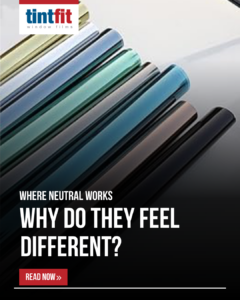
Numbers measure performance – not perception
VLT and TSER are essential benchmarks. They tell us how much light passes through the glass and how much solar energy is rejected.
But they don’t describe how the space feels.
They can’t measure:
- how clean the view looks
- how natural the colours appear
how the room behaves throughout the day - how comfortable your eyes feel after hours inside
That’s where construction, technology and optical quality come into play.
Dye, metal and ceramic: different technologies, different feel
Two films can hit the same figures using completely different methods.
Dyed films
Dyed films absorb light and heat using colour pigments. They often deliver a softer look with warmer tones and minimal reflectivity.
They can feel calm and subtle – especially where aesthetics matter.
Metalised films
Metalised films reflect solar energy away from the glass. This reflection is extremely effective for heat and glare control, but it also introduces reflectivity and sharper contrast.
The space may feel cooler – visually and physically.
Ceramic films
Ceramic technology filters heat without heavy reflection or colour shift. These films often feel clearer, more neutral and easier on the eyes, even when specs appear similar.
None of these technologies are “better” or “worse” – they simply behave differently once installed.
Optical clarity: the invisible difference
This is one of the most overlooked factors.
Two films may transmit 50% of visible light, yet one looks crisp and clean while the other appears slightly hazy.
That difference comes down to:
- polyester quality
- coating uniformity
- microscopic consistency in manufacturing
High optical clarity doesn’t show up on a datasheet but you notice it immediately when looking through the glass.
Especially in offices, conservatories and living spaces, clarity often matters more than raw numbers.
Colour tone changes perception
A neutral grey, a blue-based silver and a warm bronze may all measure the same VLT, yet they create entirely different atmospheres.
Colour tone affects:
- how daylight spreads across the room
- how white walls appear
- how comfortable the space feels over long periods
That’s why one film can feel relaxing, while another with the same stats feels visually tiring.
Again, not better or worse. Just different intentions.
Comfort is not a spec
Comfort is the combination of everything working together:
- light balance
- glare behaviour
- reflection level
- colour neutrality
- visual clarity
It’s why two rooms with identical glass and identical specs can feel worlds apart.
And it’s also why professional installers rarely choose film based on numbers alone.
Manufacturing level matters
Even within the same technology type, films are produced at different manufacturing levels.
Consistency of coatings, precision in layering, and long-term stability all influence how a film performs not just on day one — but years down the line.
This isn’t about ranking films as good or bad.
It’s about understanding that performance figures are only part of the picture.
Choosing film is about intention, not just data
When selecting window film, the real question isn’t:
“Which one has the best specs?”
It’s:
“What do I want the space to feel like?”
Cooler?
Brighter?
Softer?
More reflective?
More natural?
Once that intention is clear, the right film usually becomes obvious, even if two options look identical on paper.
At Tintfit Window Films, we believe the best choice comes from understanding how films behave, not just how they measure.
Because in the real world, numbers don’t sit in your room – you do.
Looking for the right window film?
At Tintfit Window Films, we supply a wide range of professional-grade window films from neutral and reflective to ceramic and specialist solutions trusted by installers and end users across the UK.
Whether you’re choosing film for comfort, appearance or performance, our team is always happy to help you find the right option for your project.
You can purchase professional window films at the best prices in the UK from our online shop Tintfit Window Films.